Coaches Highlight the Competitive Value
of
the NORCECA Women’s Final Four 2026
PONCE, Puerto Rico, June 4, 2026.– The Salvador Dijols Coliseum
will host the NORCECA Women’s Final Four 2026 from June 5 to 7,
an event that brings together the national teams of Mexico,
Cuba, Costa Rica, and host Puerto Rico in a round-robin format
that will determine the new regional champion.
Puerto Rico will compete for its fourth consecutive title in
this NORCECA Final Four.
The tournament will award valuable points toward the continental
and world rankings, reinforcing its importance within NORCECA’s
international calendar.
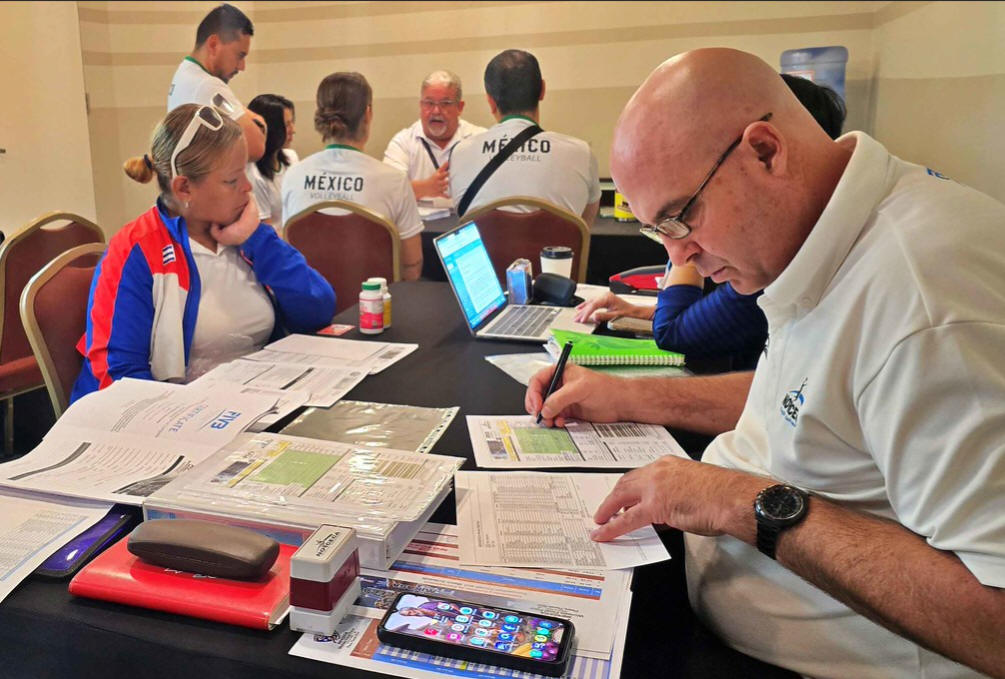
The head coaches of each team shared their perspectives on the
significance of this competition, emphasizing the value of
measuring progress, consolidating systems of play, and exposing
their athletes to a high-demand environment in Ponce.
Juan Carlos Núñez – Head Coach, Puerto Rico
Juan Carlos Núñez explained that the Puerto Rican squad arrives
with an interesting mix of new players and others who will take
on roles different from previous years. He noted that, aside
from Wilma Rivera —who has led the team and remains a regular
starter— and Valeria Vázquez, who played more than half of last
season alongside Decelise Champion, the rest of the group will
have their first major opportunity on this international stage.
He expressed satisfaction with what he has seen in training and
now looks forward to how the team will execute on the court
against the incoming opponents.
Regarding the pursuit of a fourth consecutive title, Núñez
emphasized that the key will be execution and playing solid
volleyball. He recalled that Mexico has been Puerto Rico’s
toughest rival in recent years, with intense matches and several
decided in five sets. He also analyzed Cuba, a team arriving
with powerful and physically strong athletes.
Beyond the opponents, he stressed that the most important factor
will be how his players handle the environment and the pressure
of competing at home. He acknowledged that playing in front of
their own fans can bring pressure, but it also provides
confidence. He assured that the team will receive his full
support to push them and build, from within, the expectations
needed to compete at the highest level.
Nicola Negro – Head Coach, Mexico
Nicola Negro described that Mexico arrives with the same group
that began a new competitive cycle last year, a renewed team
that continues its consolidation process. Although some players
were unavailable due to physical issues, he noted that this
tournament comes early in what will be a long and demanding
summer with a total of six events. For that reason, he views
this first competition as an essential part of their
preparation.
Regarding the possibility of ending Puerto Rico’s streak of
three consecutive titles, Negro was clear that although they
always compete to win, his priority is to see the teamwork and
evolve according to their plan. He explained that the result
will naturally follow their performance. If they play better
than the others, they will reach their goal; if not, they will
use what they learn as guidance for the rest of the summer. For
him, that is the true purpose of the tournament.
Lorenzo Martínez Cordero – Delegate, Cuba (Head Coach: Luizomar
Moura)
Lorenzo Martínez Cordero explained that Cuba arrives with a team
in full development, composed of young athletes who already have
some experience in clubs in Europe and the region. Still, he
acknowledged that the group’s overall experience is limited and
that this tournament will serve to evaluate their technical and
competitive progress. He stated that their expectations of
winning are minimal, but the team is here to fight and make the
most of every opportunity.
Martínez Cordero also expressed the team’s satisfaction in
returning to Puerto Rico after four years. He highlighted the
warm treatment they have always received, the excellent
competition conditions, and the sense of camaraderie that makes
them feel at home.
Ciro Zoratti – Head Coach, Costa Rica
Ciro Zoratti shared that he began working with the group only
three weeks ago, so he will use this tournament to get to know
the players better and make adjustments and experiments. He
explained that he had to select the players available to travel,
as organizing this type of competition is not easy. He noted
that he has a very young team and that they are beginning a
long-term development process.
Regarding the possibility of returning to the podium, Zoratti
avoided comparisons with previous editions, noting that each
season brings different teams. He acknowledged the strength of
the opponents —Mexico, Cuba, and Puerto Rico— and stated that he
does not want to pressure his group with medal expectations. His
focus is for the players to compete with their best volleyball;
whatever happens afterward will be welcomed as part of their
growth process.