FIVB
Volleyball Foundation Board approves
five
new projects and expands global reach
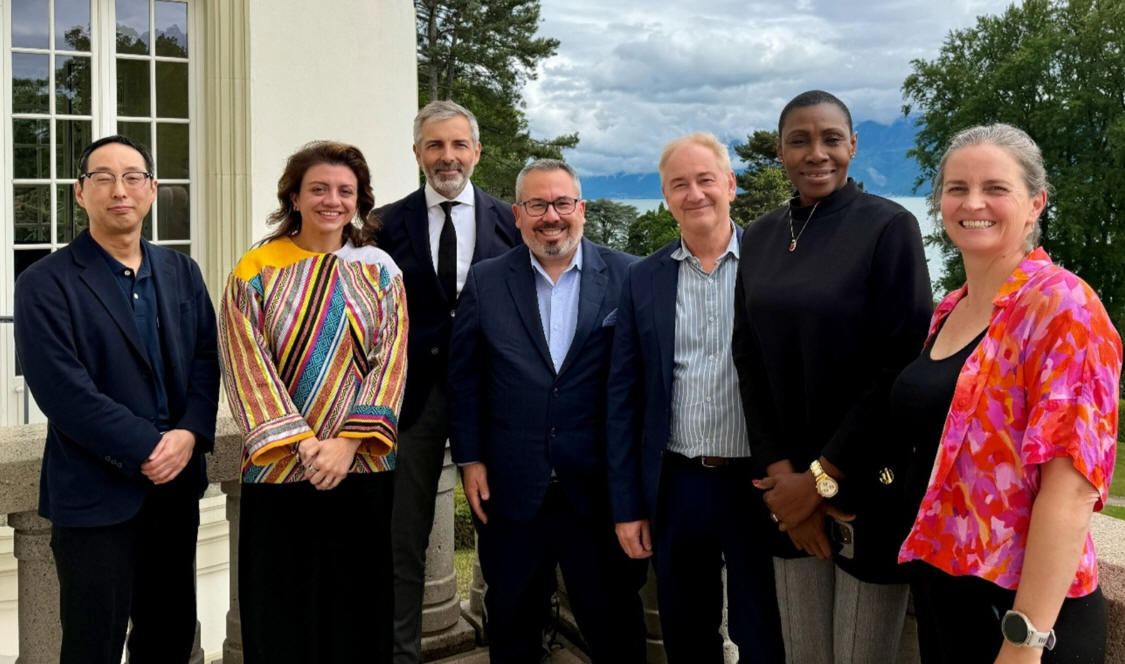
LAUSANNE, Switzerland, May 8, 2026.- On 6 May 2026, the FIVB
Volleyball Foundation gathered for a Board meeting that signalled an
exciting progression for the organisation. Presided over for the
first time by President HRH Princess Ayah Bint Faisal, the meeting
demonstrated how the Foundation is expanding its reach, deepening
its impact and setting its sights firmly on the future. What was
clear is that more people from more countries will have the chance
to experience the joy and positive impact of volleyball.
A
year to be proud of
In
its first full year of operations (2025), the Foundation approved
four more projects, reached 13,891 players across multiple
continents and mobilised 444 volunteers. CHF 220,867 was allocated
in grants to partner organisations working on the ground. Women and
girls made up 36% of all participants – a number the Foundation is
actively working to grow.
Behind every one of those numbers is a community where volleyball is
doing something more than providing experiences on a court. It is
promoting wellbeing, driving inclusion, empowering young people and
supporting social development.
Five new projects, thousands of new players
One
of the most significant decisions of the day came when five new
projects were put to the Board – and all five were approved.
New
programmes in Bhutan, Colombia, the Gambia, Paraguay and across the
Asia region will launch in the coming months. Between them, they are
expected to bring somewhere between 5,000 and 10,000 new players
into the Foundation’s network – young people for whom volleyball
will become a pathway to education, protection, community and
opportunity.
Programmes making a difference
The
project updates brought some of the most compelling moments of the
day.
In
Jordan, Generations For Peace finished its first programme run in
collaboration with the Foundation – engaging 108 young people from
refugee and host communities – exceeding its original target. What
also stood out was what those participants reported afterwards: 97%
said their psychosocial wellbeing had improved. 87% showed increased
emotional resilience. 94% demonstrated stronger self-management, and
90% reported improved social skills and connectedness. These are
young people navigating extremely difficult circumstances, and
volleyball gave them a safe space to connect and grow. 50% of
participants were female, and 50% of the youth volunteers trained in
Sport for Protection were women – maintaining gender balance
throughout.
In
Kenya, every single scholarship learner from the Githurai Kimbo
Volleyball Academy transitioned to senior secondary school. A 100%
rate. The academy has introduced volleyball into multiple local
public primary schools, launched weekend training specifically for
women and girls, and now has seven trained volunteer coaches
actively supporting sessions each week. The programme is a strong
example of how the Foundation and its supported projects can promote
education access and youth empowerment through volleyball.
In
India, the Brahmaputra Volleyball League has reached a phenomenal
scale. 408 teams, 162 villages, 4,896 athletes and over 700 matches
broadcast. The launch of the BVL+ Challenger Series has created a
real pathway from community participation to national talent
pipelines, and a UNICEF partnership now spans 13 districts. The
Board also reflected on BVL founder Abhijit Bhattacharya being named
Global Winner of the 2025 IOC Gender Equality, Diversity and
Inclusion Champions Award. His work promoting gender equality in
rural India through volleyball is exactly the kind of changemaking
the Foundation exists to support and celebrate.
Beyond The Net in Ethiopia is building something incredible too. 160
of its active participants are attending volleyball academies twice
a week, and coaches are already seeing significant skill improvement
– particularly among girls. Volley For Change in Vanuatu is also
flourishing. The programme’s facilitator guide has been updated, and
the team are preparing for Phase 1 – seven sessions over five days
targeting 50 participants – followed by Phase 2, which aims to reach
80 participants and includes a community competition. Three VNL
legacy court locations for 2026 are also being finalised, and the
She Wishes to Play project in Tanzania is moving forward and close
to getting underway.
The
Board formally recognised the progress of two programmes by
upgrading them from Bronze to Silver status – Generations For Peace
and Githurai Kimbo Volleyball Academy. For the teams behind both, it
is a well-deserved acknowledgement of what they have built and what
they continue to provide to communities through volleyball.
Looking ahead
The
Board also looked at the bigger picture. A new advisory board for
stewardship and fundraising, drawn from across the Global Volleyball
Movement was approved. Active conversations are progressing with
the UNHCR, IOC Olympic Refugee Foundation, Decathlon Foundation,
Adidas, World Para Volley, Laureus Foundation and Qatar Foundation.
The
Foundation turns two this month. It has reached nearly 14,000
players, funded programmes across multiple continents and is about
to expand its reach significantly. The mission – a greater world
shaped by volleyball – is showing up on courts, in homes, in
classrooms and in community halls.
The
work continues. And it is growing. |