NORCECA
Medical Commission Highlights Progress
in
Anti-Doping Testing and Medical Safety
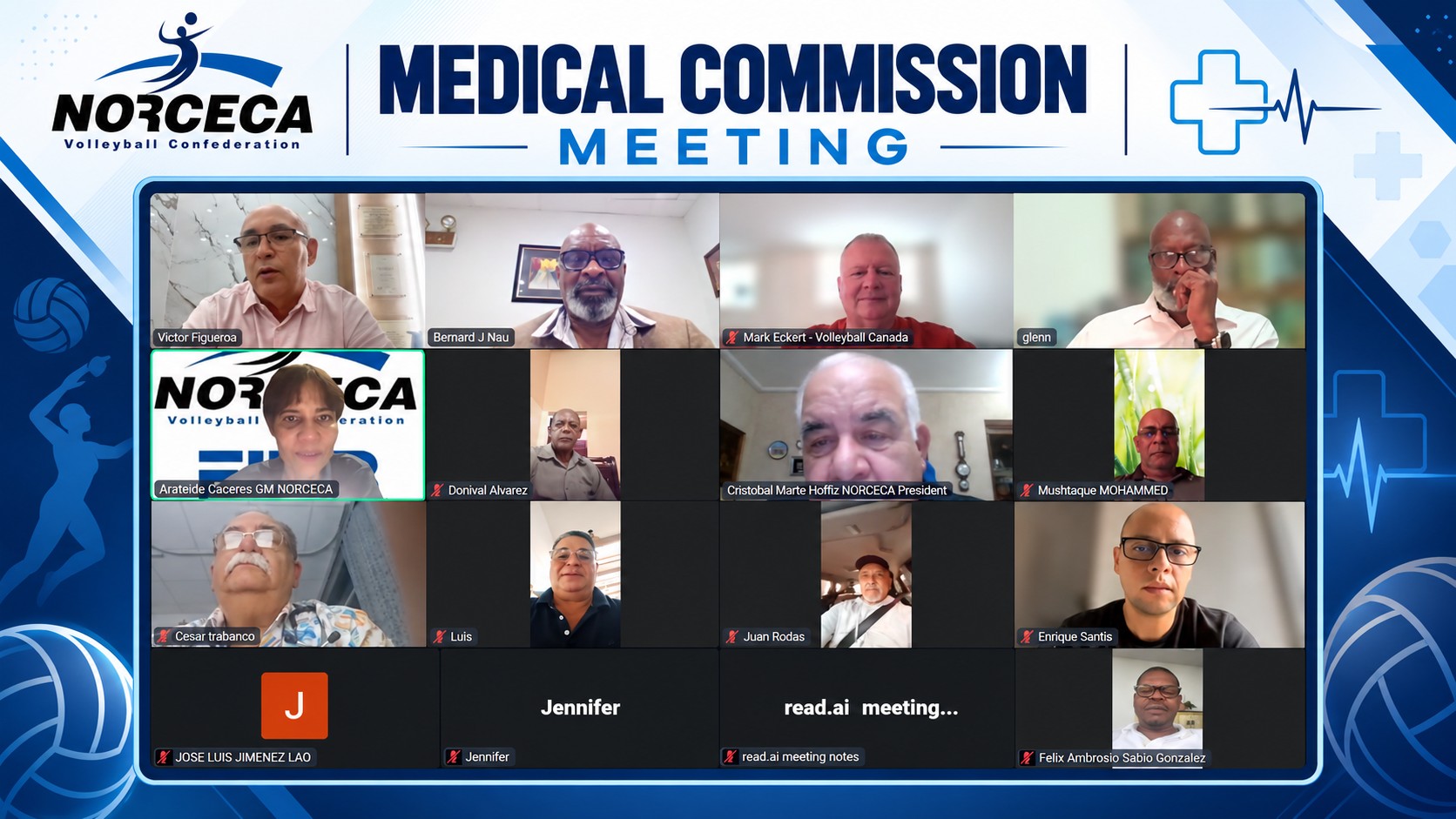
October 9, 2026.– The Medical Commission of the North, Central
America and Caribbean Volleyball Confederation (NORCECA),
chaired by Dr. Víctor Figueroa, held its annual meeting
virtually, reviewing progress in its anti-doping testing
program, medical care at competitions, and measures to
strengthen the protection of athletes and referees.
One of the main topics was NORCECA’s investment in ensuring
anti-doping testing at its international events. The initial
report presented 73 tests, a figure expected to increase with
the inclusion of additional tests conducted at indoor and beach
volleyball competitions.
During the review, 16 tests conducted at two events in Canada,
nine at the U23 competition in El Salvador, and eight carried
out by the national anti-doping agency in the Dominican Republic
were identified. The Commission also discussed testing conducted
at the Central American and Caribbean Games in both indoor and
beach volleyball.
Dr. Figueroa highlighted the growth of the anti-doping program
and the importance of maintaining an updated record of all tests
conducted. Commission members acknowledged the increase in
testing throughout the year and agreed to update the figures for
inclusion in the report to be presented at the NORCECA Congress.
The Commission also recognized the support of the Medical
Department of the International Volleyball Federation (FIVB),
whose collaboration has facilitated the coordination and
implementation of anti-doping testing at NORCECA competitions.
Another important topic was the need to strengthen medical
requirements at tournaments, particularly the availability of
qualified medical personnel, ambulances, defibrillators, and
emergency response procedures.
Participants discussed the presence of medical delegates at
events and the importance of clearly defining their
responsibilities, while considering the necessary resources and
additional costs for organizers.
Referees’ health was also an important part of the discussions.
The Commission addressed the possibility of establishing medical
evaluation and monitoring procedures, with particular attention
to health conditions that could compromise referees’ safety
during competitions.
In this regard, members discussed the use of medical
certificates and evaluation forms, as well as the need to
protect the confidentiality of referees’ personal medical
information.
Regarding beach volleyball, the Commission reviewed procedures
applicable when an athlete must withdraw from a competition for
medical reasons and the conditions that must be met before being
cleared to return to play.
The importance of proper medical documentation, certificates
supporting medical decisions, and assessments by authorized
healthcare professionals to determine whether an athlete is fit
to resume competition was emphasized.
Under the leadership of Dr. Víctor Figueroa, the Medical
Commission reaffirmed the importance of maintaining close
coordination with event organizers and NORCECA’s other technical
bodies to strengthen the implementation of medical protocols and
ensure safe conditions throughout competitions.
The meeting concluded with recognition of the Commission
members’ work and their continued commitment to strengthening
prevention, medical oversight, and healthcare procedures in
volleyball throughout the region.